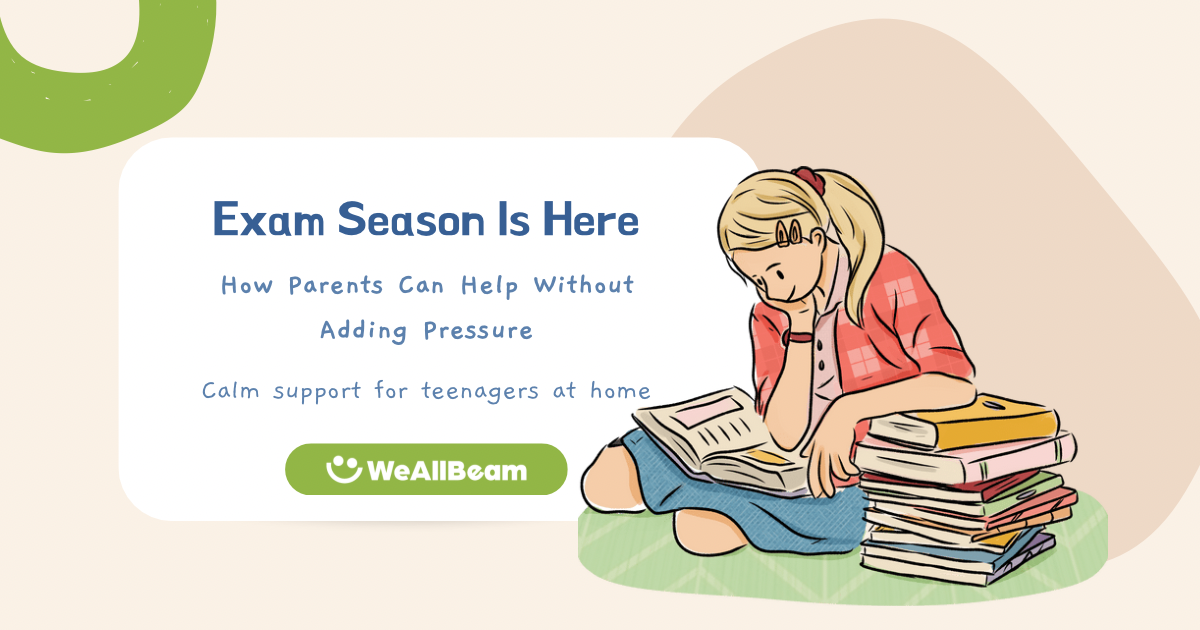
Exam Season Is Here: How Parents Can Help Without Adding More Pressure
⭐ Featured Published Public
Exam season can be a stressful time for young people and for the adults supporting them.
For many teenagers, exams can begin to feel like much more than a test of knowledge. They may start to feel like a test of worth. Stress levels can rise at home, sleep may become more difficult, small conversations can turn into arguments, and confidence can quickly drop.
As parents and carers, it can be hard to watch. The natural instinct is often to encourage, remind, motivate, or push them to keep going. But sometimes, the pressure teenagers feel does not only come from school. It can also come from the atmosphere around them.
During exam season, what many young people need most is emotional safety.
They need a calm home environment, steady adults, and reassurance that they can work hard without losing themselves in the process.
When stress becomes too high, the brain often finds it harder to think clearly, focus, or remember information. You might hear teenagers say things like:
“I know it at home, but I go blank in the exam.”
“My mind just freezes.”
“I can’t switch off.”
“Everyone else seems more prepared.”
This is not laziness. Often, it is overload.
What parents can do that actually helps
1. Regulate yourself first
Teenagers often absorb the emotional atmosphere around them very quickly.
If adults are visibly anxious, frustrated, or panicked about exams, young people may internalise that stress too. Staying calm does not mean pretending everything is fine. It means becoming a steady emotional anchor rather than adding to the pressure.
A calm parent or carer can help create a calmer child.
2. Praise effort, not only outcomes
Instead of asking only, “How many hours have you revised?” try noticing the effort they are already making.
You might say:
“I can see how hard you’re trying.”
“I’m proud of the effort you’re putting in.”
“You are more than your grades.”
Teenagers need to know they are valued beyond academic results. Confidence grows when young people feel seen for who they are, not only for what they achieve.
3. Help them break things down
Exam stress often grows when everything feels too big.
Instead of saying, “You need to revise more,” help them create smaller, manageable steps:
Small revision blocks
Clear priorities
Manageable goals
Short wins
The brain responds better to progress than panic. A small, clear next step can feel much more supportive than a general reminder to “do more.”
4. Protect sleep
Many teenagers revise while exhausted, especially when they feel behind.
But sleep plays an important role in memory, emotional regulation, and concentration. Late-night panic revision is often less helpful than it seems.
Sometimes, the most productive thing a teenager can do is rest.
Supporting good sleep routines, reducing late-night pressure, and encouraging proper breaks can make a real difference during exam season.
5. Let some conversations be normal
Not every conversation needs to become an exam briefing.
Teenagers still need moments where they can laugh, switch off, and feel like themselves. If every dinner, car journey, or quiet moment becomes a conversation about revision, the pressure can become exhausting.
A little normality can be deeply supportive.
6. Watch for signs of overload
Exam stress does not always look obvious. It may show up as:
Anger
Withdrawal
Tearfulness
Snappiness
Feeling sick
Headaches
Avoidance
Perfectionism
Procrastination
These behaviours are often signs of anxiety, rather than attitude. When this happens, young people need understanding, not criticism.
7. Remind them of something bigger
Exams matter, but they are not the final verdict on a person’s future.
Long-term wellbeing is shaped by resilience, self-belief, adaptability, communication, confidence, and emotional strength. These qualities can be affected when pressure becomes relentless.
Teenagers do not need perfect parents during exam season.
They need steady ones.
They need adults who can hold belief in them when they temporarily lose belief in themselves.
Years from now, many young people may not remember every exam result. But they will remember how home felt during difficult moments.
They will remember whether it felt like pressure or support. Fear or encouragement. Judgement or belief.
And sometimes, one of the most powerful things a parent can say during exam season is simply:
“I love you regardless of the outcome.”
That sentence can bring more calm than we often realise.
No images
Blog Info
Category: Parent Support
Subcategory: Exam Season
Created: May 8, 2026 at 11:12 AM
Updated: October 12, 2026 at 07:50 PM