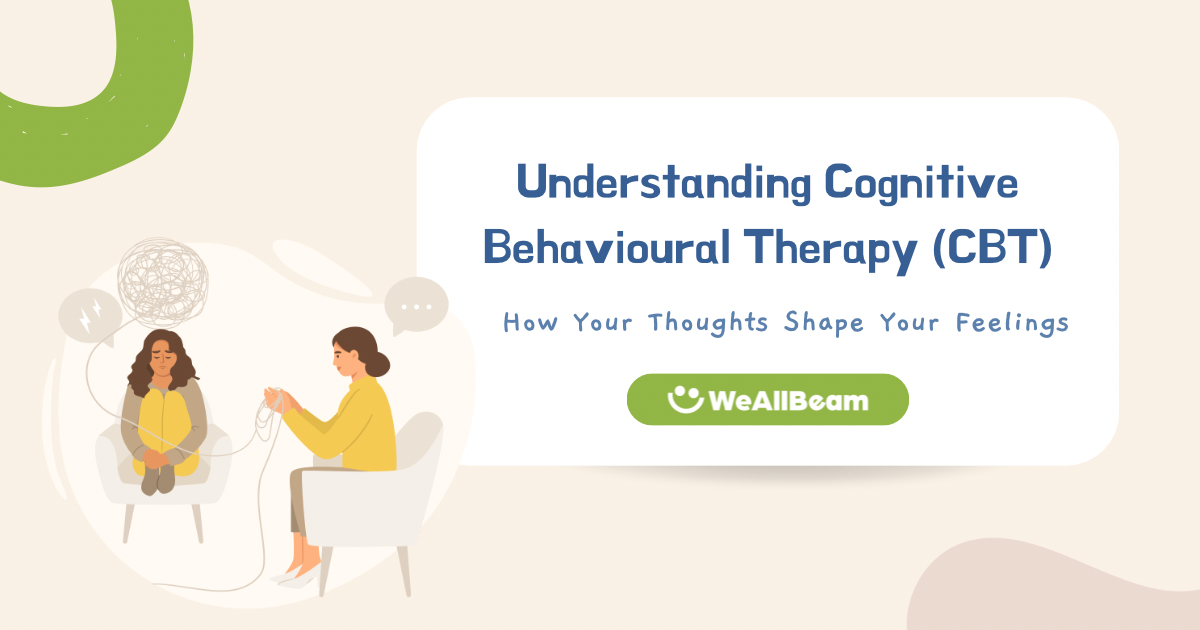
Understanding Cognitive Behavioural Therapy (CBT)
Published Public
Cognitive Behavioural Therapy, often called CBT, is one of the most widely used types of therapy. It focuses on understanding the connection between thoughts, emotions, and behaviours.
Many emotional difficulties are influenced by patterns of thinking that people develop over time. CBT helps individuals identify these patterns and learn healthier ways of thinking and responding to challenges.
What is CBT?
CBT is a structured form of therapy that focuses on how thoughts influence feelings and actions. Sometimes people develop negative thinking patterns that can lead to stress, anxiety, or low mood.
Through CBT, individuals learn how to recognise these patterns and replace them with more balanced and helpful thoughts.
How does CBT work?
CBT sessions focus on practical strategies that help individuals understand their thoughts and behaviours. Therapists work with clients to identify unhelpful thinking patterns and develop healthier ways to respond to situations.
The therapy often includes exercises and techniques that people can use in their daily lives.
Who can benefit from CBT?
CBT can help people who experience anxiety, stress, depression, low confidence, or difficulty managing emotions. It is also used to support people facing work pressure, relationship difficulties, or major life changes.
Because CBT focuses on practical tools and strategies, many people find it helpful for building long-term emotional resilience.
No images
Blog Info
Category: Mental Health
Subcategory: Therapy
Created: March 4, 2026 at 02:17 PM
Updated: October 10, 2026 at 08:50 AM