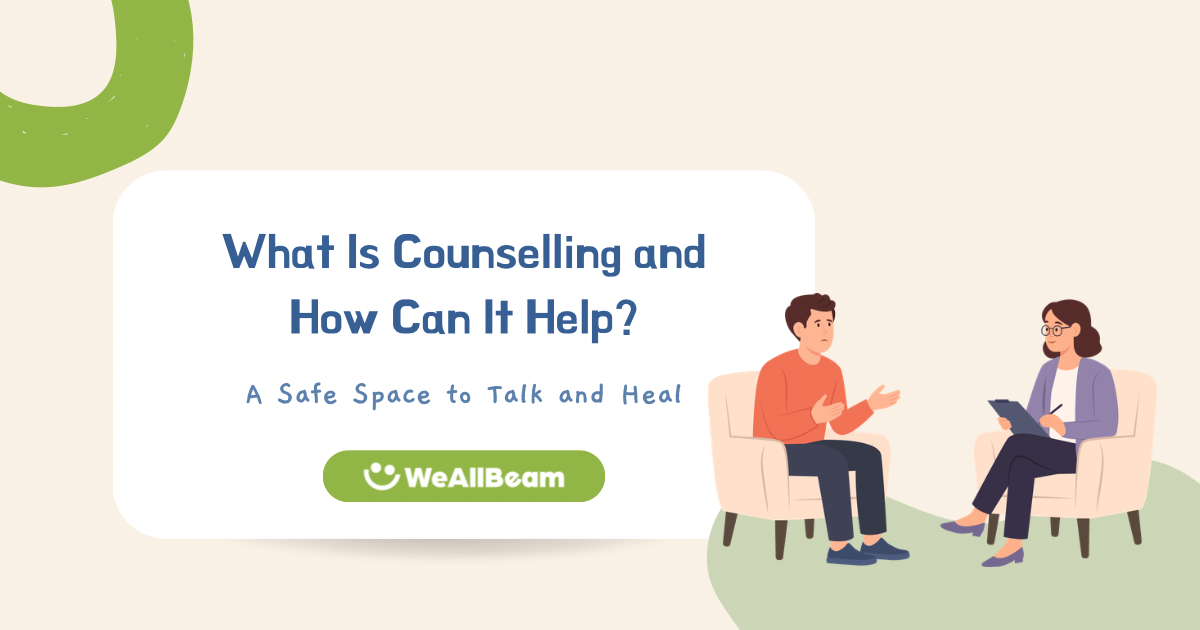
What Is Counselling and How Can It Help?
Published Public
Counselling is a space where you can talk, be heard, and feel supported. It is not about being “broken.” It is about having a safe place to make sense of what you are carrying.
Many people think they need a big reason to start counselling. That is not true. Some people come because they feel anxious. Some feel low. Some feel stuck. Others want support through a life change, grief, stress, relationship pressure, or burnout. Counselling can help with all of this.
What is counselling?
Counselling is a type of talking therapy. You meet with a trained professional and you talk about what is going on in your life. The counsellor helps you explore your thoughts, emotions, and patterns in a calm and supportive way.
It is not about judgement. It is not about being told what to do. It is a conversation that helps you understand yourself better and find steps forward.
What happens in a counselling session?
Most sessions feel simple. You talk. The counsellor listens closely and asks gentle questions. Together, you start to notice what is really underneath the stress.
You might talk about:
How you feel day to day
What has been difficult recently
Past experiences that still affect you
Relationships and boundaries
Worry, fear, sadness, anger, or overwhelm
Sleep, motivation, confidence, or self-esteem
Some people feel relief after the first session. Others need a few sessions to feel safe and open. Both are normal.
Is counselling confidential?
Yes. Counselling is confidential. That means what you share stays private.
There are a few exceptions. A therapist may need to break confidentiality if there is a serious risk of harm to you or someone else, or if there are safeguarding concerns. If that ever became relevant, your therapist would explain it clearly.
How can counselling help?
Counselling can help you:
Feel less overwhelmed
Manage anxiety and stress
Understand your emotions
Build healthier boundaries
Improve relationships
Process grief or change
Feel more confident and grounded
Break unhelpful habits and patterns
Feel more like yourself again
It is not about “fixing” you. It is about supporting you and helping you feel stronger inside.
When should someone consider counselling?
You do not have to wait until things become unbearable. Counselling can help when:
Your thoughts feel heavy most days
You feel anxious, tense, or on edge
You keep overthinking and cannot switch off
You feel low, numb, or emotionally drained
You are struggling after a big change
You feel stuck in the same patterns
You want support, clarity, and space to breathe
If you are asking yourself “should I try counselling?” that can be a sign that support would help.
A gentle first step
Starting can feel scary. That is very normal. A first session is simply a beginning. You do not need to have the perfect words. You can start exactly where you are.
If you would like to explore counselling, you can learn more here:
https://gotalktherapy.com
No images
Blog Info
Category: Mental Health
Subcategory: Counselling
Created: March 4, 2026 at 01:15 PM
Updated: October 8, 2026 at 11:31 PM