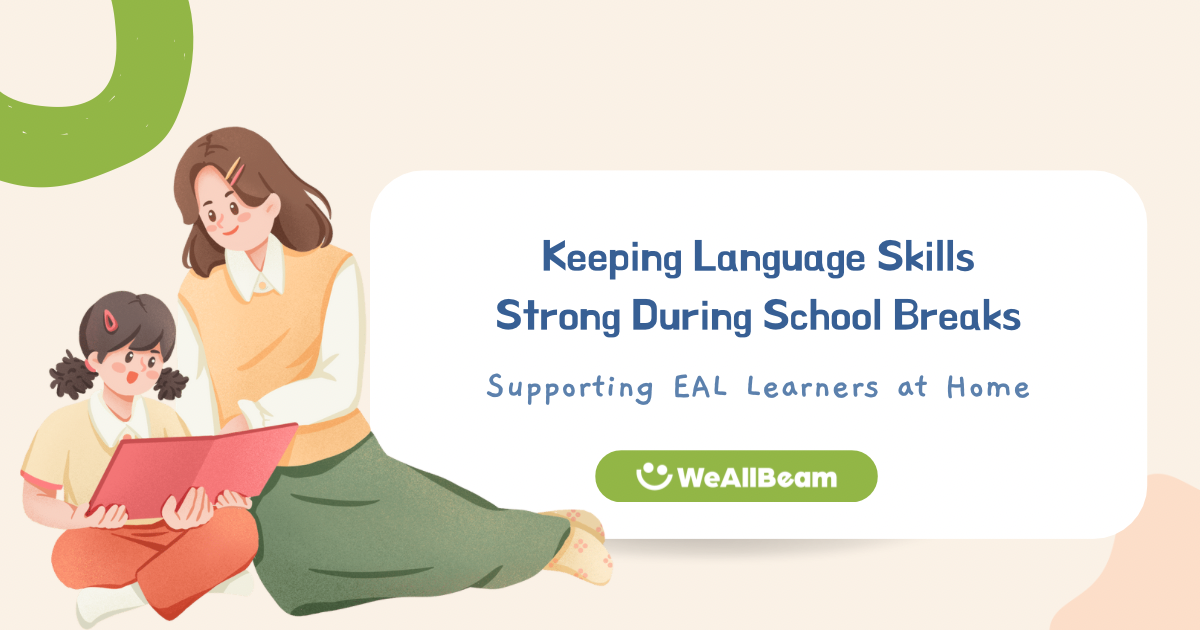
Why EAL Learners Can Lose Language Skills During School Breaks
Published Public
Many schools notice the same pattern after long school breaks. Some children return to class and seem to have forgotten simple instructions, basic vocabulary, or classroom routines.
This pattern is particularly visible among EAL learners. These are children who are learning in a language that is not their first language.
Research on language development shows that language skills can weaken when children have limited exposure to the language of instruction for an extended period of time. During school terms, children hear and use this language daily in lessons, conversations, and activities. During holidays, however, that exposure may decrease significantly.
For EAL learners, this reduction can lead to noticeable language loss. Teachers may find that some students struggle again with instructions they previously understood, or need reminders of vocabulary that was already familiar.
This does not mean the child has stopped learning. Language learning is not lost permanently. It simply needs regular use to remain strong.
The good news is that small habits at home can make a big difference.
Parents can help maintain language skills during school breaks by keeping light and natural exposure to the language of instruction. This does not require formal lessons or academic pressure.
Simple activities are often enough. Reading short stories together, watching age-appropriate programmes, playing word games, or encouraging children to talk about their day in the school language can all help maintain familiarity with vocabulary and sentence structures.
Even a few minutes of daily exposure can support continuity.
Maintaining the language of instruction at home during breaks helps children return to school feeling confident and ready to participate again. It allows them to reconnect with learning more smoothly and reduces the stress of re-adjusting to classroom language.
For EAL learners, consistency is one of the most powerful tools for long-term language development.
No images
Blog Info
Category: Education
Subcategory: Language Development
Created: March 3, 2026 at 11:43 PM
Updated: October 9, 2026 at 10:24 PM