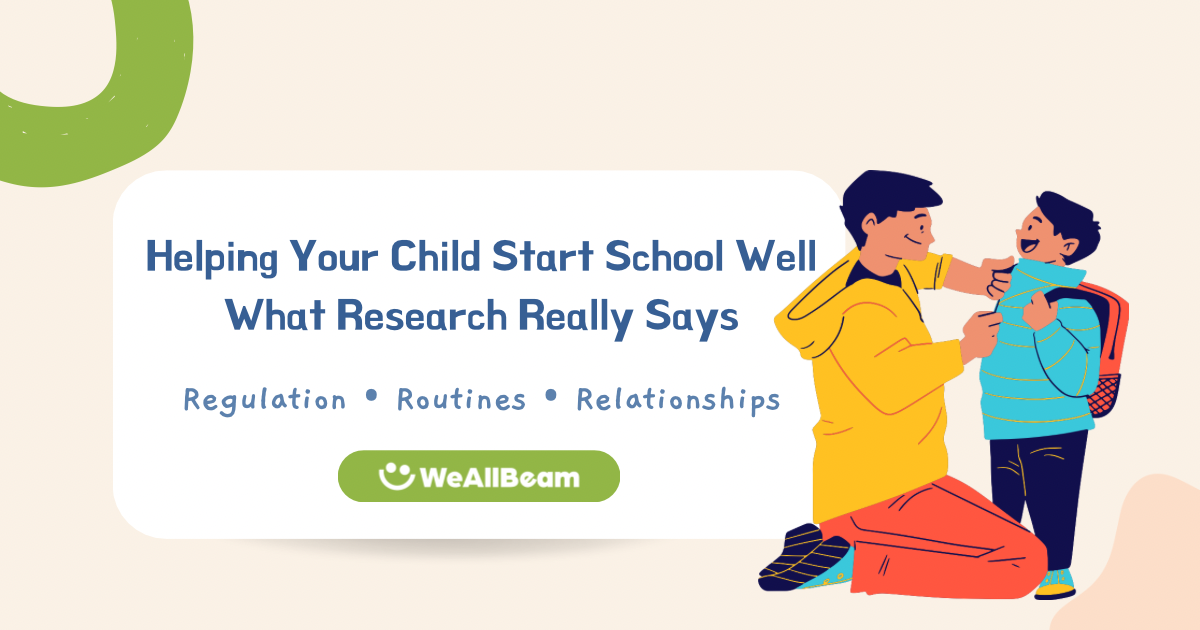
Helping Your Child Start School Well: What Research Really Says
Published Public
Starting school is often framed as a milestone. But research suggests that a smooth transition is less about early academics and more about emotional regulation, social skills, and self-management.
Large-scale education studies consistently show that children who settle well into school are not necessarily the ones who can read early or complete worksheets. They are the ones who can manage routines, regulate emotions, and interact confidently with peers and adults.
One key finding across research is that social and emotional competence plays a major role in early school adjustment. Children who can follow simple instructions, wait their turn, cope with small frustrations, and separate from caregivers calmly tend to adapt more easily.
Another important factor is executive function. This includes working memory, flexible thinking, and self-control. These skills help children listen, follow multi-step directions, and stay engaged in classroom tasks.
Interestingly, studies also show that family routines and parental involvement before school entry significantly support transition success. Predictable routines, shared reading, everyday conversations, and opportunities for independent problem-solving all contribute to school adjustment.
This does not mean children need formal “pre-academic” training. Instead, the evidence suggests that what matters most is emotional security, consistent routines, and opportunities to practise independence.
A strong start is built on regulation, relationships, and resilience.
No images
Blog Info
Category: Education
Subcategory: Early Years
Created: March 3, 2026 at 01:25 PM
Updated: October 11, 2026 at 06:43 AM