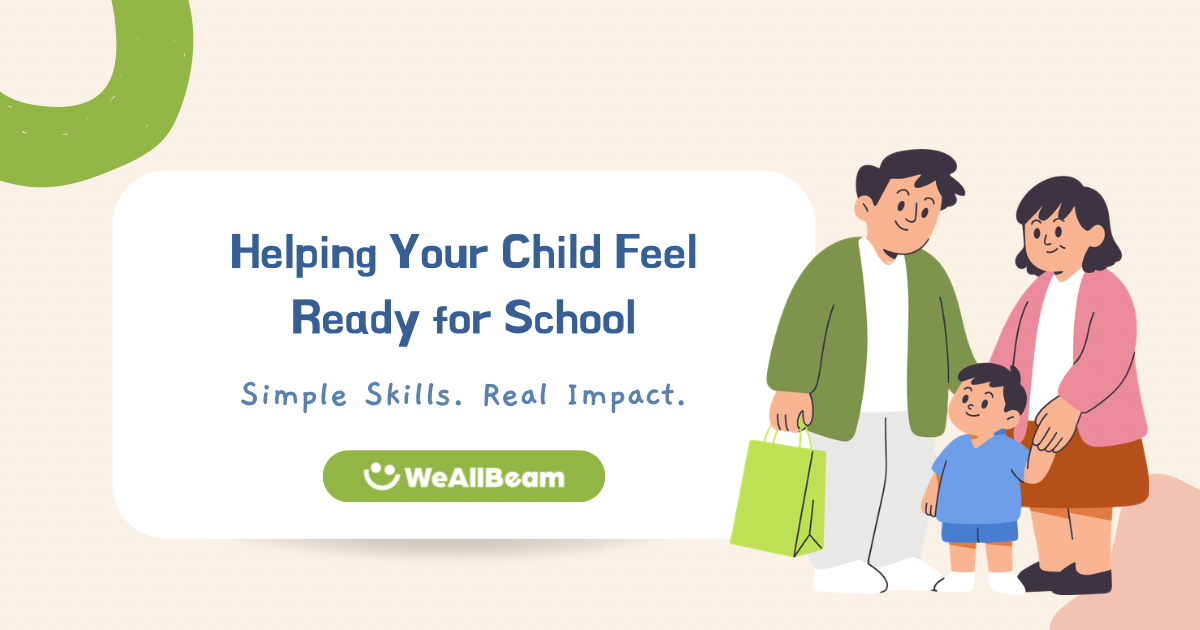
Helping Your Child Feel Ready for School
Published Public
The phrase “school ready” can feel uncomfortable. It often sounds as though children need to meet a checklist before they are welcomed into learning.
But many Nursery and Reception staff are noticing the same pattern. It is not academic gaps that appear first. It is the everyday basics.
Toileting. Dressing. Using cutlery. Stamina. Grip strength. Coordination. Being able to manage their own body long enough to take part in learning.
This is not about blame. It is about understanding what truly supports a smooth transition into school life.
If you are a parent wondering what actually helps, here are three simple things that make a real difference.
First, build self-care micro-skills.
Practise zips, buttons, coats, lunch boxes, screw lids and handwashing. These small routines are not just about independence. They build confidence and capacity.
When children can manage their own basic needs, they arrive at school feeling more secure and less stressed. Staff are also able to focus on teaching rather than constant practical support.
Second, introduce simple carry jobs at home.
Let children carry light shopping bags, move small laundry baskets, help with parcels or push the hoover. This kind of physical activity strengthens the whole body and gives the nervous system important sensory input.
Stronger postural control supports better manual control. A stable body allows freer hands. Before expecting children to sit and write, we help them build strength and stability.
Third, strengthen fine motor skills through play.
Use playdough to roll shapes, pinch small pieces, press beads or buttons into dough, cut with scissors and make tiny balls. These playful movements build the small muscles of the hand.
Fine motor development is closely linked with handwriting control and legibility. Before focusing on more writing practice, we build the hand.
It does not need to take hours. Five minutes here and there adds up. Small repetitions create strong foundations.
A smooth transition into school is not about pushing academics earlier. It is about building the life skills that make learning possible.
What small home routine has made the biggest difference for your child?
No images
Blog Info
Category: Mental Health
Subcategory: Early Years
Created: March 3, 2026 at 12:47 PM
Updated: October 11, 2026 at 06:58 AM